Sergei Eisenstein: The Anthropology of Rhythm
September 20, 2017 – January 19, 2018
opening September 19, 2017, at 6:30 pm
Nomas Foundation – viale Somalia 33, Rome

Prostory are pleased to announce the opening of the exhibition Sergei Eisenstein: The Anthropology of Rhythm on September 19, 2017. Curated by art and film historians Marie Rebecchi (Paris) and Elena Vogman (Berlin), in collaboration with the artist and typographer Till Gathmann (Berlin), the exhibition will continue through January 19, 2018. Numerous documents from Eisenstein’s archives will be exhibited for the first time, including notebooks, drawings, film footage and photographs.
Rhythm is a medium of change; it constitutes a transition – from fear to joy, from ennui to awareness, from a simple movement to choreography or dance. The Soviet film director Sergei Eisenstein understood better than anyone that rhythm is necessary to enact transformation: as an anthropological means of organizing experience, rhythm becomes a vehicle of revolution.
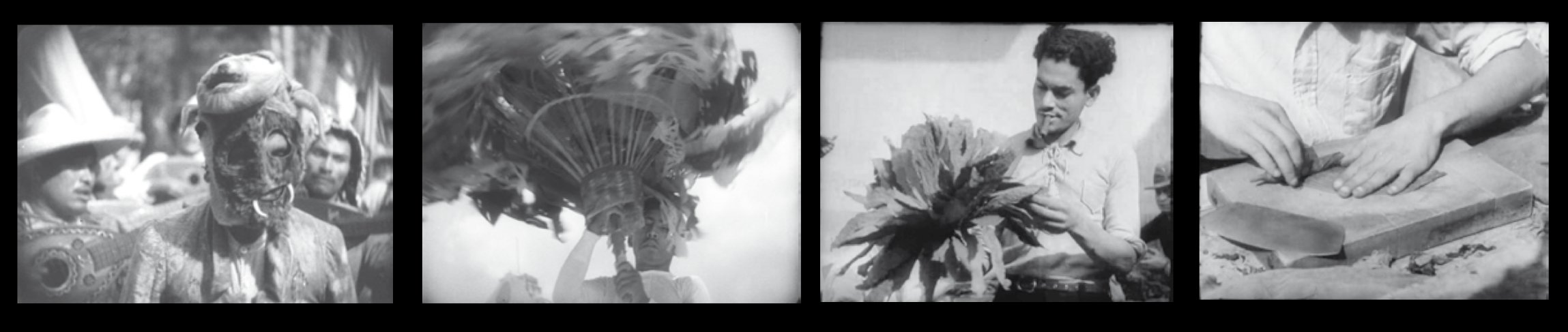
The exhibition explores the intersecting aesthetic and political dimensions of the anthropology of rhythm in Eisenstein's unfinished film projects: Que viva Mexico! (1931–1932), Bezhin Meadow (1935–1937), and Fergana Canal (1939). In his images from Mexico and his later anthropologically-oriented film projects in Ukraine and Uzbekistan, Eisenstein brings the two meanings of “revolution” into play. Here we perceive the emerging relations of history poised between repetition and irruption, return and revolt, between a single destiny – a body or a gesture – and the social and political narrative that constitutes its background. Each of these film projects invents a new and unique cinematographic approach, yet they all share a common archaeological model of history and an anthropological construction of the gaze. By focusing on the representation of people, in particular the variety of ways in which Eisenstein filmed human faces, the materials presented in the exhibition illuminate hitherto unknown documentary and ethnographic facets of Eisenstein’s work.
A volume published by NERO, Rome, will accompany the exhibition. The book, designed by Till Gathmann, features essays by the curators, translations from Eisenstein’s unpublished diaries and further archival materials.